


 Search

LHC Support Services and Resources
As we enter the last term of the school year, stress and tiredness can impact wellbeing at different stages for different students. We have put together some reminders of things that might help to support your child if she is having a tough time as we begin the countdown to Christmas!
Often when we are stressed or down about something, we can fall out of our usual routine. Although motivation can be low during these times, ensuring we are having regular meals, adequate sleep and getting outside or moving our body in some way each day can make a huge difference. Looking out for changes in these healthy habits can also be a warning sign that something may be going on or something is on your child’s mind.
Doing things together or a little differently if time allows like cooking or baking a favourite snack/meal, getting out for a walk or trying a YouTube mindfulness wind down exercise before bed might help ease some of the reluctance that can be around when things feel hard.
There is lots of research on the importance of connection for positive wellbeing. If your child is struggling with some friendship ups and downs or struggling to find people with shared interests, we have lots of lunch time activities this term ranging from writing, tech, crafts and games to volunteering service groups. These do not need to be booked in advance and are open to anyone who is looking to try something different and maybe meet someone new.
It can be very anxiety-provoking to strike up a conversation with someone new or to approach a group for the first time. Some young people will benefit from role-playing what this might look like with someone they trust in advance and you can always contact your child’s HPL if they need support to attend an activity or build connections.
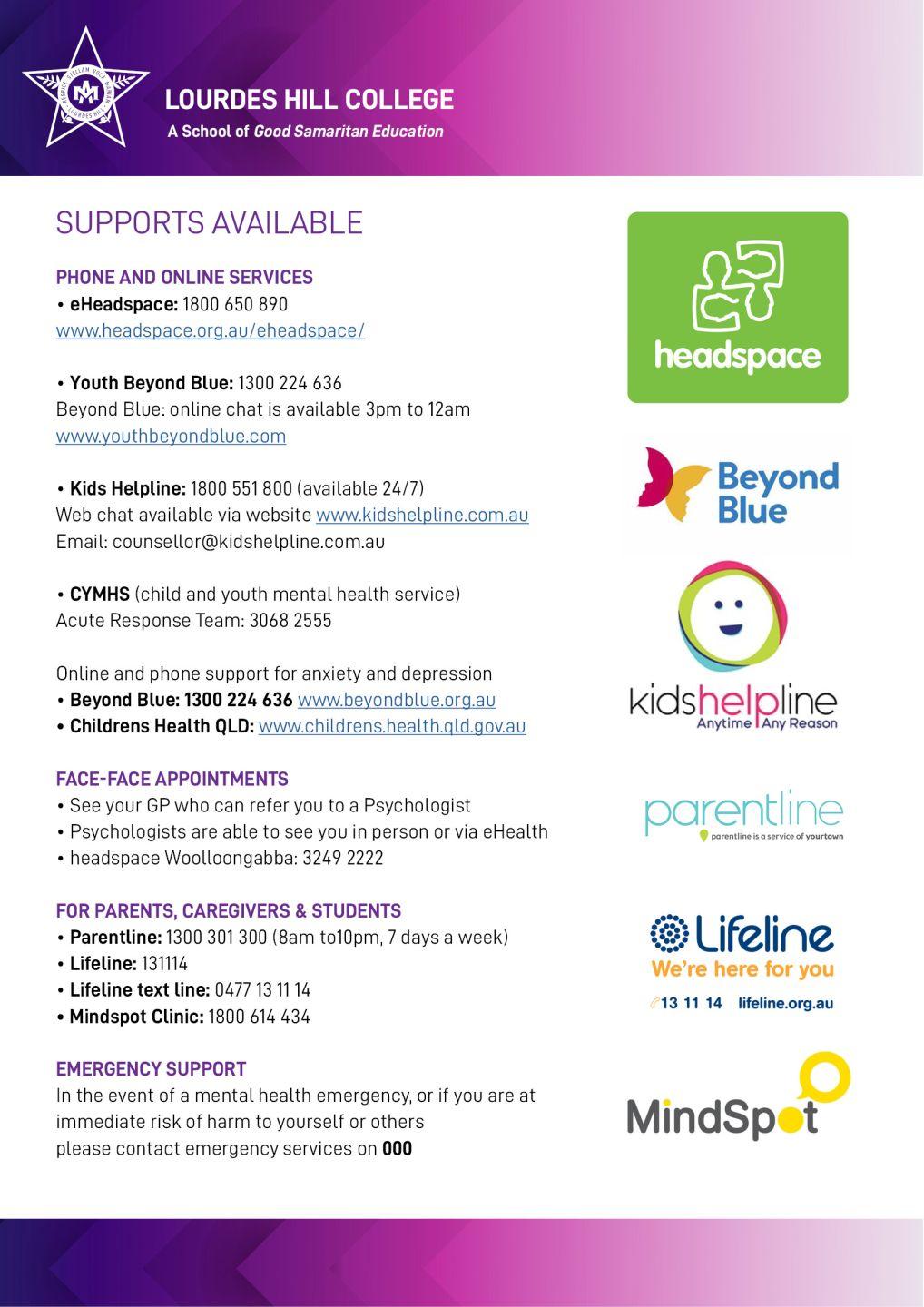
If you are worried about your daughter’s wellbeing at school, we are here to help. You can contact your child’s House Pastoral Leader to discuss potential support options including our College Counselling Service which is open to all students.
The College Counsellors are qualified and experienced professionals with qualifications in Clinical Psychology or Psychology and are registered with the Australian Health Practitioners Regulation Agency (AHPRA). All members of our team have experience supporting young people and their families with mental health concerns. Our job is to support students if they are having a difficult time with school, friends or at home that is impacting life at LHC. Counsellors are also available in any crisis situations that might happen at school or if a student feels very distressed for any reason during school time.
 Minding Your Mental Health in Term 4
Kindness, Clicks and Conversations about Digital Wellbeing
Minding Your Mental Health in Term 4
Kindness, Clicks and Conversations about Digital Wellbeing
The College Counsellors are qualified and experienced professionals with qualifications in Clinical Psychology or Psychology and are registered with the Australian Health Practitioners Regulation Agency (AHPRA). All members of our team have experience supporting young people and their families with mental health concerns. Our job is to support students if they are having a difficult time with school, friends or at home that is impacting life at LHC. Counsellors are also available in any crisis situations that might happen at school or if a student feels very distressed for any reason during school time.
If you want to reach out to them directly, please email cou@lhc.qld.edu.au or complete and submit a referral form.
Beck House - Megan Christie beck@lhc.qld.edu.au
Cullen House - Cadence O'Reilly cullen@lhc.qld.edu.au
D'Arcy House - Leah Condoleon darcy@lhc.qld.edu.au
Healy House - Bec Craig healy@lhc.qld.edu.au
Hendriks House - Anthony Murnane hendriks@lhc.qld.edu.au
Lee House - Jen Davis lee@lhc.qld.edu.au
McKee House - Maree Inger mckee@lhc.qld.edu.au
Roche House - Cathie O'Sullivan roche@lhc.qld.edu.au
Whether your child is gaming, streaming, chatting, or researching online, here are some simple tips to help keep them safe:
Talk About Online Safety: Have open conversations about responsible internet use, including what’s appropriate to share and who to trust online.
Set Device Boundaries: Establish screen time limits and encourage device-free time for family activities.
Use Parental Controls: Enable built-in controls on devices and apps to restrict access to age-inappropriate content.
Monitor App Usage: Be aware of which apps your child is using and check privacy settings regularly.
Encourage Strong Passwords: Teach your child to use unique, strong passwords and never share them—even with friends.
Avoid using public Wi-Fi for personal use: Most public Wi-Fi networks don’t encrypt data, meaning anything you send or receive—like emails, passwords, or personal messages—can be visible to others on the same network and “Man-in-the-Middle Attacks”.
Parent Multi-Factor Authentication: We encourage all parents to have Multifactor Authentication set up on your own personal accounts. Particularly where you are accessing the parent app. The security settings on the Parent App now have face sign in and the use of phone security settings.
Think Before You Click: Avoid clicking on unknown links or downloading files from strangers.
Protect Your Identity: Never share personal information like your full name, address, or school online.
Report Suspicious Activity: If something feels off, tell a trusted adult or teacher immediately.
Use School Accounts Responsibly: Only use your school email for school-related activities and avoid signing up for non-educational services.
We are committed to ensuring a safe digital learning environment for all students and over the past months have strengthened our guiderail technologies with the assistance of AI to include:
Monitor Email Activity: Detect unusual behaviour or potential threats in student email accounts.
Enforce Safe Communication Policies: Ensure that students are using email appropriately and securely.
Audit and Investigate: Quickly respond to incidents with detailed logs and insights.
This technology protects student data and upholds privacy. Our cyber safety education program and parent support demonstrate our dedication to digital safety and responsible tech use. Please review pages 22–23 of the student diary with your child, covering the “Code of Conduct – Information Technology” and “Personal Mobile Devices.”
If you’d like to learn more about how to keep your family safe online, or have questions about our school’s cybersecurity practices, here are some great resources and always feel free to reach out to our tech support team for any specific IT issues.
Young People | eSafety Commissioner
Parents | eSafety Commissioner
LHC Social Media Safety Guide & Tips
Lourdes Hill College is proud to partner with SchoolTV, which provides families with expert resources and practical strategies for supporting student well-being.
This platform offers a range of information on topics such as mental health, resilience, and personal development, complementing the LHC Wellbeing Program and supporting students throughout their school journey.
Click the link below to explore these valuable resources.